



Emil Partow · Research Associate · Mathematical Foundations of AI

, I’m Emil Partow.

I am a research associate working on uncertainty quantification at the Chair for Mathematical Foundations of AI at LMU Munich, led by Prof. Dr. Gitta Kutyniok. In most settings, a model should not only predict, but also say how sure it is. That uncertainty is what makes a prediction safe to act on. My work spans mathematical theory, such as probabilistic regression and kernel scores, and real-world applications. Lately, I have also turned to autoresearch: orchestrating agentic loops that solve research problems in mathematics.

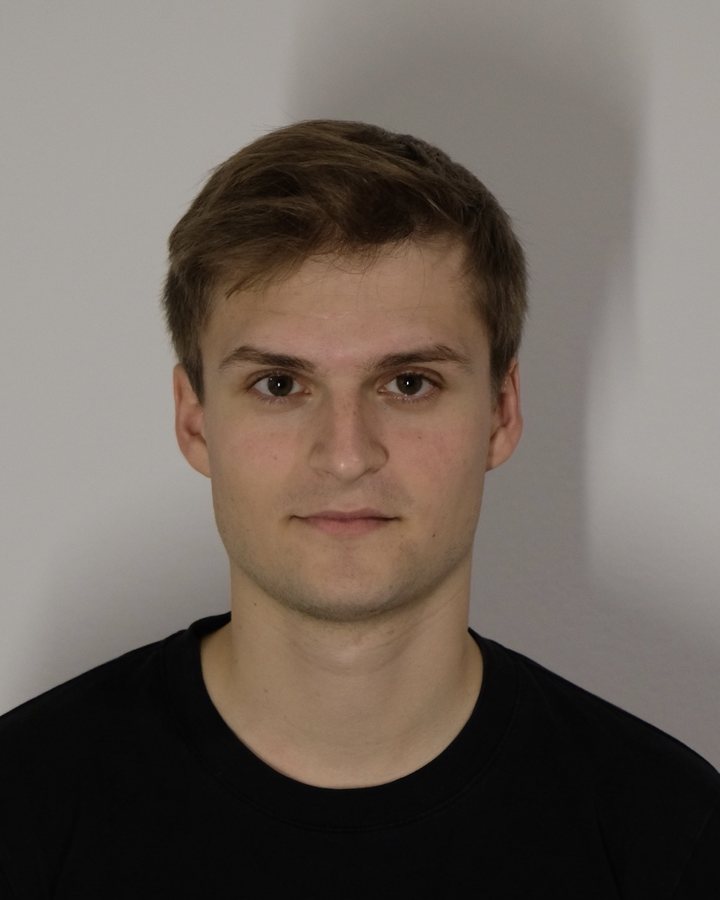
Portrait of Emil Partow

Research. Probabilistic prediction, from theory to the real world.

01

Probabilistic regression

In regression it helps to know not only what a model predicts, but also how uncertain it is about it. Probabilistic regression therefore predicts a whole distribution, from parametric families to generative models such as engression. I explore their robustness, their scalability and high-dimensional outputs whose components depend on each other.

Prediction with its 90% range · move over the plot to see the whole predicted distribution

02

Kernel scores

Most models are trained with the negative log-likelihood, which minimizes the Kullback–Leibler divergence to the data. But the KL is unbounded and can be unstable. In many settings it makes sense to use kernel scores instead: proper scoring rules built from positive-definite kernels that need only samples, stay bounded, and are still minimized only by the true distribution.

Forecast μ, σ against N(0, 1): kernel score vs log-likelihood · move to change, try a small σ

03

Robust applications

When model uncertainty is ignored, small errors propagate until a decision goes wrong. Imagine a probe on its way through space: the further it gets from its ground station, the less precisely it can be tracked, so small navigation errors add up. If it plans with that uncertainty, it keeps a safe distance from the asteroids and arrives; if it ignores it, it flies too close and crashes. Similar effects hold for forecasting time series and weather. Understanding control mechanisms is part of my work in the RTG METEOR.

Uncertainty grows with distance from the ground station · click to fly again

04

Autoresearch

Fascinated by the capabilities of frontier LLMs, I have lately become interested in autoresearch: a very special kind of control loop. If every agent is equally good, why are ten thousand of them better than one? I am interested in how to orchestrate them: designing the loops they work in, managing what context each agent gets to see, and verifying what they find.

Agents explore, an orchestrator keeps the best and prunes the rest · click for a new run

Publications. Also on Google Scholar.

  1. 2026 Preprint

    SCORE: Spectral Correlation Estimation for Multivariate Gaussians

    Christopher Bülte, Emil Partow, Astha Gupta, Pascal Esser, Gitta Kutyniok

    A scalable framework that learns covariances of high-dimensional Gaussian targets in spectral space, with linear storage and 𝒪(d log d) cost, trained with the closed-form Gaussian kernel score. Includes invariance results for kernel scores and finite-sample PAC bounds. Evaluated on time-series forecasting, monocular depth estimation and spatial weather prediction.

  2. 2025 Preprint

    Consistency of Learned Sparse Grid Quadrature Rules using NeuralODEs

    Hanno Gottschalk, Emil Partow, Tobias J. Riedlinger

    Expected values via a learned transport map composed with Clenshaw–Curtis sparse-grid quadrature. We show when the fast mixed-regularity rate survives the transport, learn general transports as ReLUk+1 neural-ODE flows, and prove that the resulting estimator is PAC consistent.

News. What happened lately.

Contact. Say hello.

Happy to talk about uncertainty and collaborations. E-mail is the best way to reach me.

Emil Partow
Chair for Mathematical Foundations of AI
LMU Munich, Room 509
Akademiestraße 7, 80799 München
emil.partow@math.lmu.de